
Dental Implant Timeline
How Long Does a Perfect Smile Take? The Dental Implant Timeline
Missing a tooth affects more than just your smile. It changes how you chew, how you speak, and how you feel about yourself when you look in the mirror. While dentures and bridges have been the standard solution for decades, dental implants are now the gold standard for tooth replacement. However, unlike getting a filling or a crown, getting a dental implant isn’t a single-visit procedure. If you’re considering the dental implant procedure, here’s what you need to know about the process from start to finish.
What Are Dental Implants?
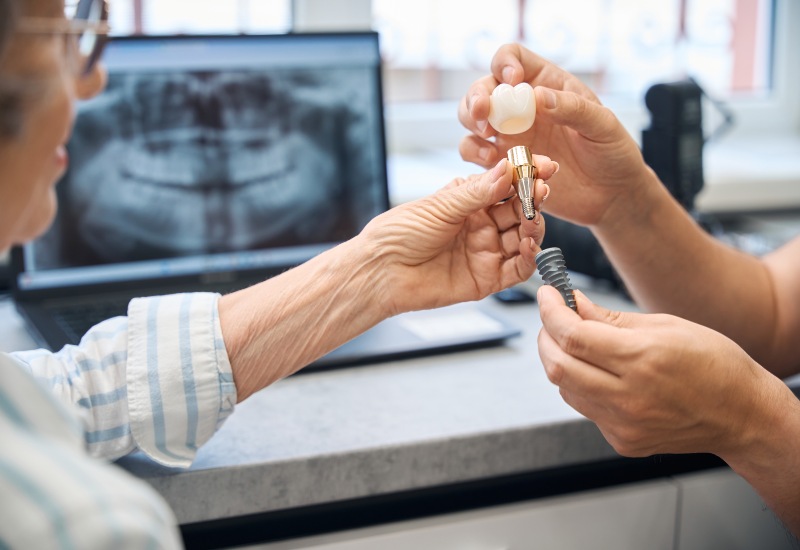
A dental implant isn’t just a fake tooth—it’s an artificial tooth root that provides a permanent base for fixed or removable replacement teeth. The implant itself is a small, screw-like post inserted into the jawbone. Once the implant is healed and fused to the jawbone, it acts as a sturdy anchor for an abutment (a connector piece) and the final crown (the visible tooth). This three-part structure ensures that implants don’t slip, make noise, or cause bone damage.
The Types of Dental Implants
Not all jaws are the same, and therefore, not all implants are the same. Your dentist will recommend a specific type based on the health of your jawbone and your specific needs:
- Endosteal Implants—These are the most common type of dental implant. Shaped like small screws, cylinders, or plates, they are surgically placed directly into the jawbone.
- Subperiosteal Implants—This type of dental implant consists of a metal frame fitted onto the jawbone just below the gum tissue. As the gums heal, the frame becomes fixed to the jawbone. These are typically used for patients who do not have enough healthy natural jawbone for the standard dental implant process.
- Zygomatic Implants—These are the least common type and are generally reserved for complex cases where the patient doesn’t have enough healthy jawbone. Instead of the jawbone, the implant is placed in the cheekbone.
Why Are Dental Implants the Gold Standard?
Most people don’t like the idea of surgery, especially oral surgery. However, the benefits of dental implants extend far beyond cosmetics. Here are some of the reasons so many patients elect to undergo the dental implant procedure:
- Easier Chewing—Because implants are anchored into the bone, they restore nearly all of your original chewing power. This allows you to maintain a varied, healthy diet without restriction.
- Bone Loss Prevention—Natural tooth roots stimulate the jawbone when you chew, and when a tooth is lost, that stimulation stops. This can lead to a “sunken” facial appearance and premature aging. Implants are the only tooth replacement option that replaces jaw stimulation.
- Improved Speech—Poor-fitting dentures can slip within the mouth, causing you to mumble or slur your words. Because dental implants are secure, you can speak without the worry that your teeth might slip.
- Stop Shifting Teeth—Over time, teeth can shift to fill the gaps left by missing teeth. This leads to misalignment, bite issues, and even TMJ pain. An implant acts as a placeholder, keeping adjacent teeth in their proper positions.
- Easier Cleaning—Some restorations make dental cleanings more difficult. Because implants work just like natural teeth, you can keep up your normal hygiene regiment.
- Protecting Healthy Teeth—Bridges sometimes require grinding down healthy teeth to hold the restoration in place. Dental implants don’t require damaging additional teeth, and you’ll be able to maintain as much of your natural smile as possible.
The Dental Implant Timeline, Step-by-Step
The dental implant timeline is complex, but there’s a method to the madness. Every patient is different, but each follows the same general roadmap:
Day One: Start With a Comprehensive Consultation
The dental implant process starts with a thorough examination. Your dentist will take X-rays and 3D images and discuss your medical history. With this information, they can determine if you have sufficient bone volume. They’ll also need to know about any other health conditions, such as uncontrolled diabetes or osteoporosis, that might affect healing. Taken together, all these details will influence your overall treatment plan.
Following Days: Pre-Surgery Preparations
With a treatment plan in place, you and your dentist can begin preparing for the procedure. If your damaged tooth is still present, it will need to be extracted. Bone grafting will likely be needed which requires placing sterile bone from a jar into the extracted tooth’s socket. This creates a solid foundation for the implant but adds time to the schedule.
A Few Months Later: The Dental Implant Procedure
The next step is the surgery itself. Your oral surgeon will make an incision into the gums to insert the dental implant’s metal post. The procedure itself usually takes 30 minutes to an hour, and most patients are back to work within a day or two. Remember, everyone heals differently, so talk to your dentist about what you can expect.
Three to Six Months: Osseointegration
Now comes the healing phase, or osseointegration. After surgery, you’ll head home, and over the next several months, your jawbone will grow and intertwine with the dental implant. This process provides a solid base for your new artificial tooth, just as roots do for your natural teeth. Lower jaw implants typically take about three months to fuse, while the upper jaw can take closer to four months.
Post-Healing: The Abutment Placement
When osseointegration is complete, you may need additional minor surgery to expose the implant in the case that it isn’t exposed at the initial surgery.
The Final Step: Crown Placement
With everything healed up, your dentist can take the impression for the final crown. This restoration will be fabricated in a lab at least two weeks prior to its placement, if not done earlier. Your brand-new tooth will match the shape and color of your natural teeth perfectly—no one will know the difference! The entire dental implant process timeline takes three to five months in total, depending on your specific needs.
Recovery and Aftercare for Dental Implants
Once you wrap up the dental implant timeline, the work isn’t quite over. The success of your implants depends on how well you care for the surgical site and implant itself. Here’s what you need to know about aftercare:
- Immediately Post-Surgery—For a few days, you might have some swelling and bruising. Fortunately, ice packs and over-the-counter pain medication usually manage discomfort effectively. You might be instructed to eat only soft foods during this time, too.
- The First Few Weeks—Keep your mouth as clean as possible to prevent infection during the healing process. You will be prescribed an antibiotic in addition to your daily oral hygiene routine.
- Long-Term Care—Once the crown is on, you treat your implant like a natural tooth. While the implant can’t get cavities, the gum and bone around it can still get infected if not cleaned properly. Be sure to keep up with good brushing habits and schedule dental cleanings
Frequently Asked Questions
Is the dental implant procedure painful?
Most patients say the dental implant procedure is much less painful than they expected. Local anesthesia is used during the surgery, so you feel no pain. Post-operative discomfort is often less than a tooth extraction and can generally be managed with over-the-counter painkillers.
How long do dental implants last?
With proper brushing, flossing, and regular check-ups, the implant screw itself can last a lifetime. The crown (the visible part) suffers normal wear and tear and may need replacement after 10 to 15 years.
Can I smoke after getting dental implants?
Smoking significantly increases the risk of implant failure. It slows down healing and increases the risk of infection. Most dentists will strongly advise you to stop smoking weeks before the dental implant process starts and throughout the healing timeline.
Does insurance cover dental implants?
It varies. Many basic dental insurance plans do not cover implants, classifying them as a cosmetic procedure. However, coverage is improving as implants become the standard of care. Always check with your provider before committing to a dental implant procedure.
Start Your Journey Toward a Confident Smile
The timeline for dental implants is certainly longer than getting a denture or a bridge. However, the payoff is well worth it. The team at Twin Aspen Dental Center is excited to help you restore your smile with this highly requested treatment option. Contact our office in Parker, CO to learn more about dental implants.