
Reliable Dental Bridge Solutions for Parker, CO
Restore Your Smile with a Dental Bridge Procedure
If you live in or near Parker, CO, you can trust Twin Aspen Dental Center for all of your restorative dentistry needs. Gaps in your smile can affect your appearance and impact how you chew and speak, but our dentists offer modern solutions to restore your confidence and enhance your overall well-being. Among them are dental bridges, which can help you eat, talk, and smile with ease again. We’ll use the latest technology and materials to ensure your dental bridge looks natural and fits perfectly, whether you’re missing a single tooth or several.
What Is a Dental Bridge?
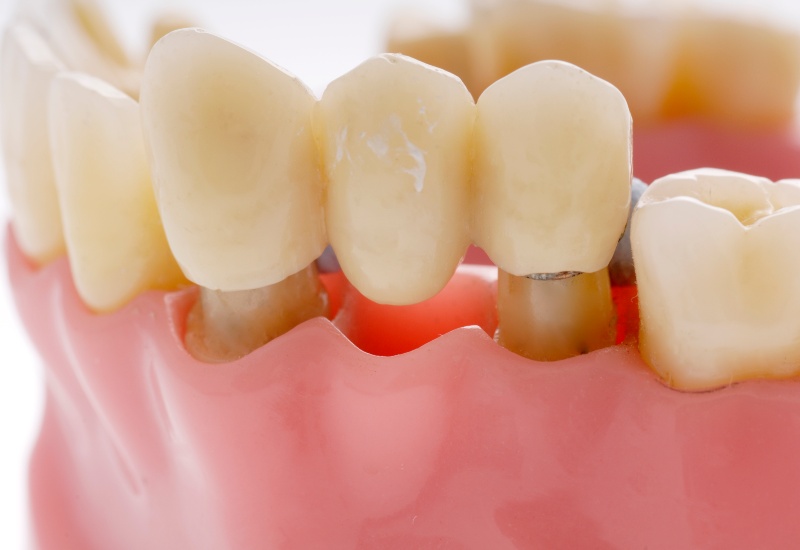
A dental bridge is a solution that connects both sides of a gap created by one or more missing teeth. It’s a custom-made false tooth – or teeth – that’s held in place by the adjacent teeth. The false tooth is called a pontic. It can be made from gold, alloys, porcelain, or a combination of these materials. Most people choose porcelain because dentists can match it to the natural color of their teeth. The teeth that support the bridge are called abutment teeth.
Who Needs a Dental Bridge?
You might be a good candidate for a dental bridge if you have one or more missing teeth. However, simply having a gap isn’t the only requirement. To get a bridge, you generally need:
- Healthy teeth on either side of the missing tooth to support the bridge
- Strong bone density to hold the supporting teeth in place
- Good overall oral hygiene
If you ignore a missing tooth, it can lead to other problems. Your remaining teeth may shift into the empty space, leading to a bad bite. This can also make your teeth harder to clean, increasing the risk of gum disease.
Types of Dental Bridges
Your dentist will recommend the best dental bridge option based on the location of your missing tooth and the health of your other teeth. The four primary types of dental bridges are:
- Traditional Bridges – This is the most popular type of bridge. It consists of a false tooth held in place by dental crowns that have been cemented onto each of the abutment teeth. We usually use traditional bridges when patients have natural teeth on both sides of the gap.
- Cantilever Bridges – This type is similar to a traditional bridge, but the pontic is supported by a dental crown on only one side. It’s often used when you are missing a tooth in the front.
- Maryland Bridges – Also known as resin-bonded bridges, these use metal or porcelain wings on each side of the bridge. These wings are bonded to the back of existing teeth. This is often considered a conservative option because natural teeth don’t need to be filed down as much. It is often used as a temporary solution that is not the definitive plan for restoring a site.
- Implant-Supported Bridges – Instead of being supported by crowns or frameworks, these bridges are supported by dental implants. Usually, one implant is surgically placed for every missing tooth, and these implants hold the bridge in place. This is considered the strongest and most stable system.
Understanding the Dental Bridge Process
Getting a dental bridge typically requires two visits to a dentist. The dental bridge procedure often comprises:
First Visit
- Preparation – The dentist prepares the abutment teeth. This involves recontouring these teeth by removing a portion of the enamel to allow room for a crown to be placed over them.
- Impressions – Next, impressions of your teeth are made. These serve as a model from which the dental lab will make your bridge.
- Temporary Bridge – Your dentist will create a temporary bridge to protect the exposed teeth and gums while your permanent bridge is being made.
Second Visit
- Fitting – Once your permanent bridge is ready, the temporary bridge is removed.
- Adjustments – The new bridge is checked and adjusted to ensure a proper fit and bite.
- Cementing – If everything fits well, the new bridge is cemented into place.
Advantages of Getting Dental Bridges
Choosing dental bridge treatment offers several appealing benefits:
- Restore Smile – Bridges look natural and can make your smile appear whole again.
- Better Chewing and Speaking – Missing teeth can make it hard to pronounce words or chew food properly. Replacing them fixes these issues.
- Maintain Face Shape – Your teeth support the muscles in your face. When teeth are missing, your face can look sunken. Bridges help maintain your natural face shape.
- Prevent Shifting – A bridge acts as a space saver, stopping your other teeth from drifting out of position.
FAQ About Dental Bridges
How Long Do Dental Bridges Last?
With good oral hygiene and regular checkups, dental bridges can last anywhere from five to 15 years, and sometimes even longer.
Will It Be Hard to Eat With a Dental Bridge?
Replacing missing teeth should make eating easier. However, you are more likely to get food caught around the bridge making your home care more important than ever.
How Do I Care for My Dental Bridge?
It’s essential to maintain the health of your remaining teeth, as the bridge relies on them for support. Brush twice a day and floss daily. Your dentist might also recommend using a special floss threader or waterpik to clean under the bridge.
Contact Us for Dental Bridges in Parker, CO
If you’re missing one or more teeth and want to learn more about replacement options, there’s no better team to call in Parker, CO, than Twin Aspen Dental Center. We can restore your smile and confidence with high-quality dental bridges, so contact us today.